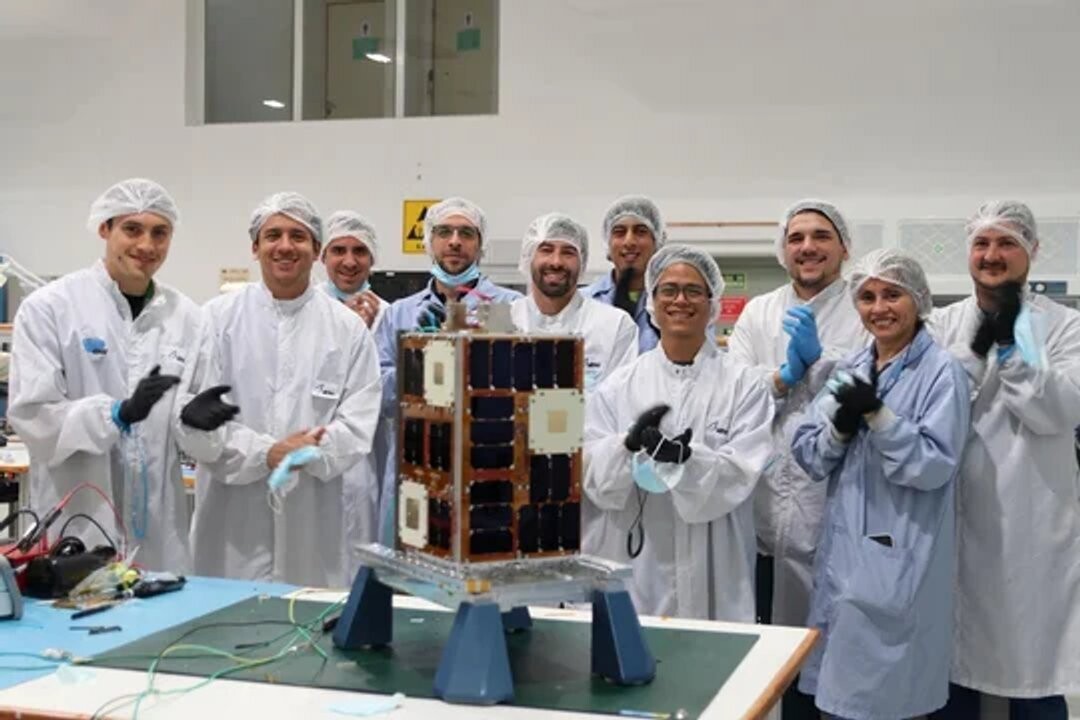
Buenos Aires, March 31 (NA) -- The Secretariat of Innovation, Science, and Technology highlighted the launch of the Argentine satellite ATENEA and assured that it is a 'historic step' for national engineering and its projection into deep space. In a social media post, the agency stated that the microsatellite is 'not just a technological development,' but a demonstration of Argentine potential in the aerospace sector. According to the Argentine News Agency, the satellite will operate at more than 70,000 kilometers from Earth, setting a record distance for national developments and positioning it in the realm of deep space. The project is part of NASA's Artemis II mission, which will mark the return of crewed flights around the Moon after more than 50 years, and will include an Argentine development as a secondary payload. The agency emphasized that ATENEA will allow for the validation of proprietary technology, including long-range navigation and communication systems, in addition to generating key data for future space missions. The microsatellite was designed and built in the country by scientific and technological teams linked to CONAE, national universities, and sector companies, as part of an international cooperation project with NASA.